
Schedule your preventative visits today
Table of contents
- Your back-to-school health checklist starts here
- What to reset before the first day
- What to schedule before life gets busier
- Back-to-school mental health check-ins
- Where to start if something already seems off
- A school-ready health checklist for parents and caregivers
- What a healthy start to school can look like
- The next step if you still have questions
Back-to-school checklist items include backpacks, forms, school supplies, and even lunch prep. But have you ever used a back-to-school health checklist? Before the first day arrives, it helps to not just consider what they need for their school days, but also think through your child’s sleep, routines, checkups, medications, and anything that already seems a little off.
Those are the elements that can make this season feel like a lot. You’re not just getting your child ready for school. You’re also trying to make sure they’re ready to function well once earlier mornings, fuller days, and more structure return.
This guide is here to help with that. Think of it like a school supply list for your child’s health: what to reset now, what to schedule before life gets busier, and where to start if something already doesn’t seem quite right.

Your back-to-school health checklist starts here
A good back-to-school health checklist isn’t about doing everything perfectly. It’s about getting ahead of the things that are easy to put off during summer, then suddenly become harder to manage once school starts.
Some checklist items help your child feel better day to day, like sleep, meals, and routines. Some help prevent last-minute stress, like school physicals, medication refills, and screenings. And some help you know what to do if your child already seems anxious, tired, moody, or physically off before day one even arrives.
The goal isn’t to overcomplicate the season. It’s to make the transition feel smoother, steadier, and less reactive for both you and your child.

What to reset before the first day
Before school starts, it helps to reset the parts of daily life that affect how kids feel and function most. These are the routines that tend to drift over summer, then matter a lot once earlier mornings and full school days return.
Reset sleep before school does it for you
Sleep is usually one of the first routines to shift over summer. Later bedtimes, slower mornings, and looser schedules may work fine for a while, but they can make the first week of school feel harder than it needs to.
If your child’s schedule has drifted, start adjusting it gradually instead of waiting until the night before school starts. Moving bedtime and wake time earlier in small steps is usually much easier than trying to force a sudden reset.
A steadier sleep routine can help with:
- Mood
- Patience
- Energy
- Focus
- Easier mornings
If your child already struggles with falling asleep, staying asleep, or waking up rested, it’s worth paying attention before school begins.
Reset meals and snack timing
Summer often changes the timing of kids’ meals. Breakfast may happen later, lunch may be less structured, and snacks may happen whenever there’s time.
Before school starts, it helps to re-establish a more predictable rhythm:
- When breakfast happens
- What your child can realistically eat before school
- What lunch and after-school snack timing may look like
- Whether your child tends to get irritable, tired, or unfocused when meals are delayed
This doesn’t need to turn into a food overhaul. The goal is simply to help your child’s body get used to a more structured day again.
Reset medications, refills, and school-day logistics
If your child takes medication, has asthma, allergies, ADHD, diabetes, or another ongoing health need, now is a good time to think through what the school day will require.
That may include:
- Checking refill timing
- Confirming medication instructions
- Updating school forms
- Making sure anything needed at school is ready
- Reviewing what needs to stay at home versus travel with your child
Even if nothing has changed medically, school logistics can create new friction. Taking care of that now can save stress later.
Reset your child’s emotional runway
Not every child shows back-to-school stress the same way. Some seem excited. Some get quiet. Some become clingy, irritable, tired, emotional, or suddenly more resistant around bedtime and morning routines.
That doesn’t automatically mean something is wrong. A return to school is still a transition, even when it’s a positive one.
This is a good time to check in on:
- How your child feels about school starting
- Whether they seem more worried than usual
- Whether they’re already showing stress through sleep, mood, or physical complaints
- Whether they’ve had a hard school transition in the past
Giving your child a little emotional runway before day one can help you spot what’s normal adjustment and what may need more support.

What to schedule before life gets busier
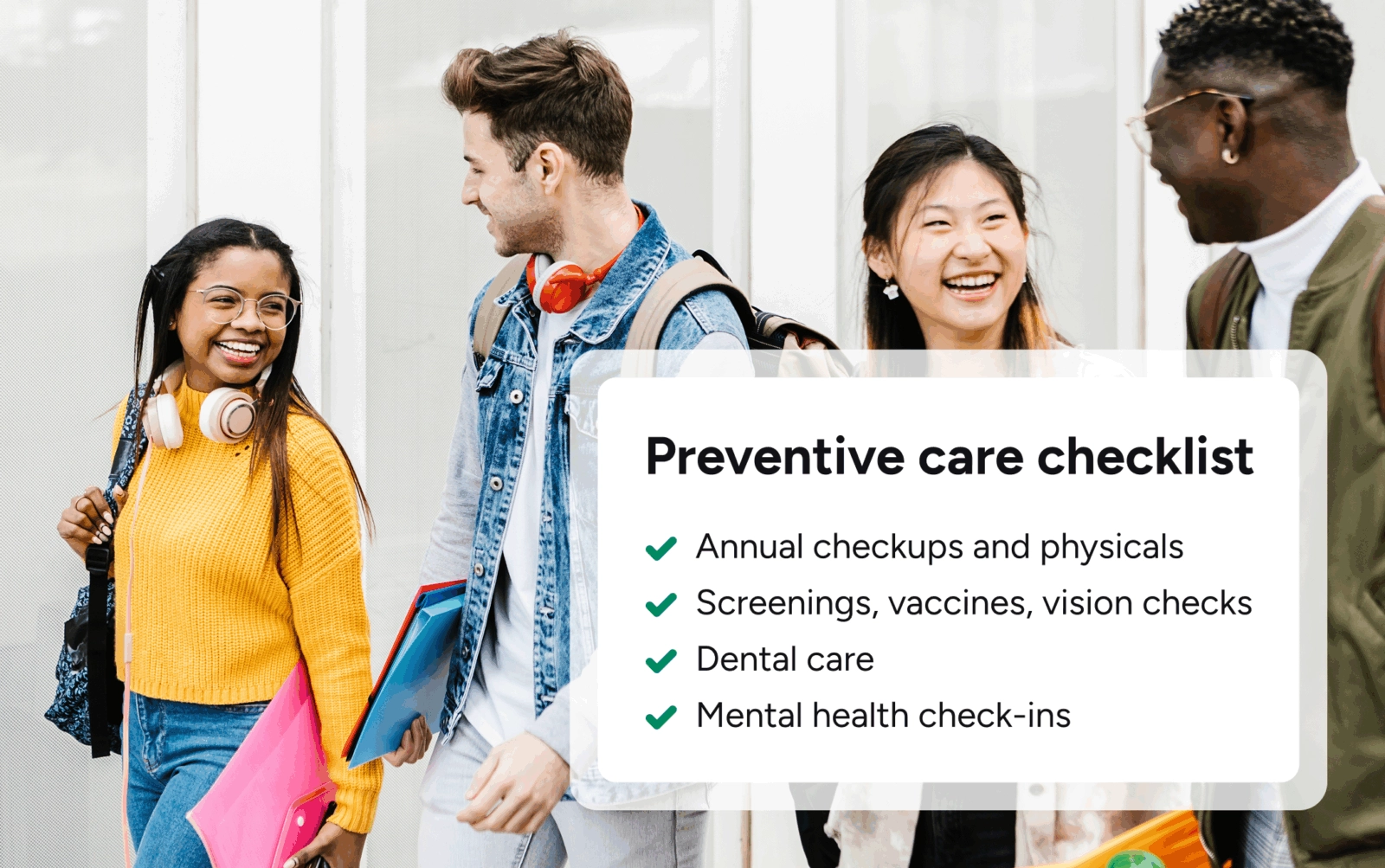
Some of the most helpful things to schedule before school starts are also the easiest to delay. Once the school year is fully underway, it often gets harder to find time, coordinate appointments, and keep up with routine care.
That’s why this part of the checklist matters. A little planning now can prevent bigger hassle later.
Annual checkups and school physicals
If your child needs a school physical, sports physical, or routine annual visit, it’s smart to schedule a back-to-school health checkup before the school calendar gets crowded.
Even when a physical isn’t required, it can still be a useful chance to:
- Check in on growth and development
- Discuss any recurring concerns
- Review medications
- Ask questions before the school year gets busy
Primary care is often the best first step for this kind of routine support.
Vaccines, screenings, and vision/hearing checks
Back-to-school season is also a good time to review whether your child is up to date on:
- Vaccines
- Vision checks
- Hearing checks
- Routine screenings recommended for their age
These aren’t just boxes to check. They can affect how comfortably and successfully a child moves through the school day. A vision issue, for example, may show up as trouble focusing, frustration, headaches, or school avoidance before anyone realizes eyesight is part of the issue.
Dental and ongoing care needs
If you’ve been meaning to schedule the dentist, follow up on an ongoing concern, or revisit a condition your child already manages, this is a good window to do it.
That may include:
- Dental visits
- Allergy or asthma follow-up
- ADHD medication management
- Recurring stomachaches or headaches
- Sleep concerns
- Skin issues that keep flaring up
- Other questions you know will be harder to deal with once routines are packed
If something keeps coming up, it’s usually easier to address it before it turns into one more disruption during the school year.

Back-to-school mental health check-ins
Back-to-school mental health support doesn’t have to wait for a crisis. If your child already seems more anxious, withdrawn, irritable, overwhelmed, or emotionally reactive than usual, it may be worth thinking about support sooner rather than later.
That doesn’t mean every child who’s nervous about school needs therapy. It does mean that mental and emotional well-being can belong on a back-to-school checklist, too.
It may help to pay attention if your child:
- Seems unusually worried about school
- Has physical complaints tied to school stress
- Is sleeping poorly
- Is more tearful, clingy, or shut down than usualIs avoiding activities they’d normally do
- Just doesn’t seem like themselves

Where to start if something already seems off
This is often the hardest part. You may know something feels different, but not know what to do first.
Should you wait it out? Schedule a routine visit? Look into behavioral health support? Find a different kind of provider? Ask for help sorting it out?
You don’t need to have it all figured out before taking the next step. But it helps to start with some simple questions.
Start with what’s changed
A good first question is: what feels different from your child’s usual baseline?
That could be:
- Headaches
- Stomachaches
- Trouble falling asleep
- Sleeping much more or less than usual
- Irritability
- School avoidance
- Appetite changes
- Clinginess
- Low energy
- Big shifts in mood or behavior
It’s also helpful to ask:
- Is this new?
- Is it getting worse?
- Is it affecting daily life?
- Is it interfering with sleep, school, socializing, or routine?
That can help you decide whether something is likely to settle with adjustment or deserves a closer look now.
When primary care is a good first step
Primary care can be a strong place to start when you’re dealing with:
- School physicals
- Vaccines
- Routine checkups
- Sleep concerns
- Recurring headaches or stomachaches
- Appetite or energy changes
- Mild physical symptoms
- General questions about whether something needs follow-up
If the issue seems medical, routine, or not clearly urgent, this is often the most natural first stop.
When behavioral health support may help
Behavioral health support may make more sense when what you’re noticing seems more connected to:
- Anxiety
- Mood
- Coping
- Stress
- Big changes in behavior
- Emotional overwhelm
- School-related dread
- Withdrawal from friends or activities
This is especially worth considering if the issue is affecting daily functioning, not just showing up as a little nervousness.
For some kids, stress shows up physically first. That can still be a clue that emotional support may help.
When you may need help finding the right provider
Sometimes the biggest challenge isn’t deciding whether to get help. It’s figuring out who to see.
That may be the case if:
- Your child may need specialized care
- You’re not sure whether the issue is medical, emotional, or both
- You need help finding a provider who fits your child’s needs
- You’ve already tried one route and still feel unsure
In those moments, support with finding the right provider or guidance on next steps can be especially helpful.
If you’re not sure, start with guidance
You don’t need to map the whole care journey on your own before doing anything. If you’re not sure what kind of support your child needs, what to schedule first, or where to start, it can help to begin with guidance.
That’s especially true when:
- Something feels off, but you can’t quite tell how serious it is
- Your child’s symptoms don’t fit neatly into one category
- You’re juggling multiple concerns at once
- You want help understanding your options
Sometimes the best first step is getting help thinking through the next one.

A school-ready health checklist for parents and caregivers
Use this as your working back-to-school checklist:
- Reset your child’s sleep schedule gradually.
- Re-establish breakfast, lunch, and snack timing.
- Check medication refills, forms, and school-day logistics.
- Schedule an annual checkup or school physical if needed.
- Review vaccines and age-appropriate screenings.
- Consider dental, vision, and hearing needs.
- Pay attention to stress, mood, and school-related worries.
- Notice anything new, unusual, or affecting daily life.
- Make a plan for any care you know will get harder to schedule later.
- Know where to start if your child already seems off.

What a healthy start to school can look like
A healthy start to school doesn’t mean every routine is perfect and every appointment is done before the first bell rings. It means your child is starting the year with the basics in place: more structure, fewer preventable stressors, and a plan for anything that still needs attention.
It also means you don’t have to wait until the first rough week to act. The more you can reset now, schedule now, and notice now, the easier it is to support your child before small issues become bigger disruptions.

The next step if you still have questions
If you’re still unsure what matters most, what to schedule first, or where to start with a concern, you don’t have to figure it out alone.
The back-to-school season gets busy fast. A little guidance now can make it easier to support your child with more confidence and less scrambling later.
Contact the Care Team if you’d like help thinking through the next step to your child’s care.

Quan Lam is a copywriter with over 15 years of experience writing and editing content for both start-ups and legacy brands, as well as 2 years of writing experience exclusively within the healthcare space. She currently lives and works in New York City.

Dr. Brian Knox is board-certified in Internal Medicine and Pediatrics, and has been overseeing clinical services at Included Health for the past 3 years. Prior to joining IH 6 years ago, Dr. Knox spent 9+ years providing primary care to adults and children.